
4 Areas Businesses Overlook During Office Renovations
Key Takeaways
- Electrical planning affects long-term office functionality.
- Storage areas are often reduced too aggressively during renovations.
- Poor acoustic control can affect productivity and meeting quality.
- Future expansion should be considered before renovation works begin.
- A proper commercial interior design strategy in Singapore can help businesses avoid costly post-renovation adjustments.
Introduction
Office renovations are often driven by visual goals such as improving branding, modernising layouts, or creating a more collaborative environment. However, many businesses focus heavily on aesthetics while overlooking operational details that affect daily workplace efficiency. Problems usually surface only after employees return to the office, leading to additional rectification work and unnecessary expenses.
After all, in many commercial interior design projects, businesses prioritise visible features such as furniture, lighting, and meeting rooms while underestimating practical requirements behind the workspace. An experienced office renovation contractor in Singapore will usually identify these concerns during the planning phase, helping businesses avoid disruptions later. Several commonly overlooked areas can significantly affect how well the office functions after renovation works are completed.
1. Electrical and Power Distribution
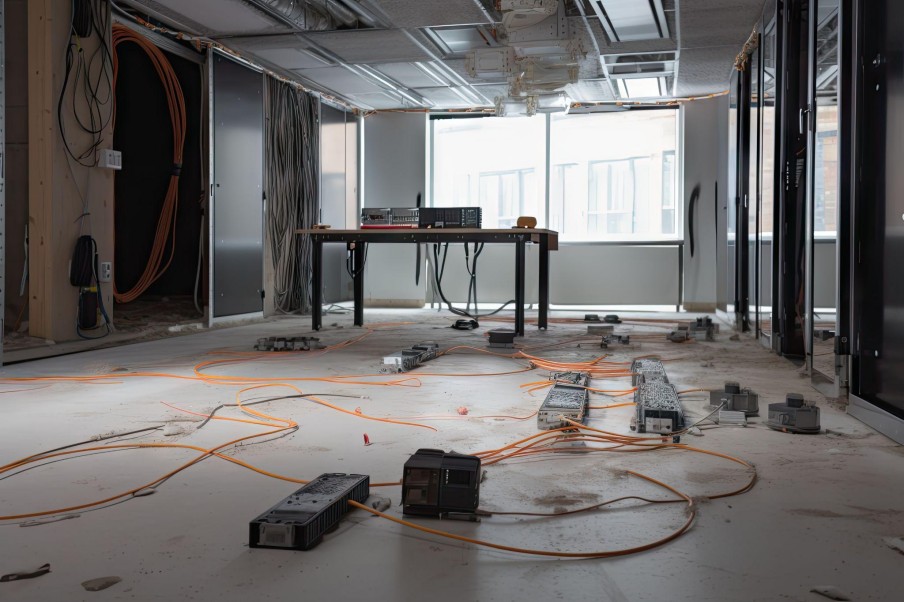
Electrical infrastructure is one of the most overlooked aspects of office renovations. Businesses often focus on workstation placement and interior finishes without properly assessing whether the office has sufficient power support for daily operations. Modern workplaces rely heavily on laptops, monitors, video conferencing systems, servers, and collaborative technology, all of which require proper electrical planning.
Insufficient power points, badly positioned floor boxes, and overloaded circuits are common issues that appear after renovation completion. Meeting rooms may lack charging access, while collaborative workspaces may not support flexible seating arrangements. Businesses sometimes end up relying on extension cords or additional rewiring, which can affect both safety and workspace appearance.
Fortunately, in modern commercial interior design, electrical planning is increasingly integrated into early-stage space planning discussions. Proper coordination between designers, contractors, and IT teams helps businesses avoid expensive modifications after employees move back into the office.
2. Storage and Utility Areas
Storage planning is another area businesses frequently underestimate. Many companies prefer open and minimalist office layouts, but reducing storage too aggressively often creates operational problems later. Even in digital workplaces, businesses still require space for archived documents, office supplies, pantry inventory, cleaning equipment, and marketing materials.
However, without proper planning, these items may end up occupying meeting rooms, corridors, or unused corners of the office. Utility areas such as printer stations, server rooms, and cleaning supply storage are also sometimes overlooked during renovation planning. This instance can affect organisation and reduce the overall efficiency of the workspace.
An experienced office renovation contractor usually evaluates workflow requirements before recommending storage solutions. Integrated carpentry, concealed cabinets, and multi-functional storage systems can help businesses maintain a clean office appearance while still meeting practical operational needs.
3. Acoustic Control and Noise Management
Noise management is commonly overlooked during office renovations, especially in open-plan layouts. While open workspaces encourage collaboration and maximise floor space, they can also create distractions if acoustic control is not properly addressed.
Hard flooring materials, exposed ceilings, glass partitions, and large communal areas can increase sound reverberation across the office. Meeting rooms may also suffer from poor speech privacy, making confidential discussions difficult. These issues become more noticeable once employees begin using the office daily.
Many modern commercial interior design projects in Singapore now include acoustic considerations during the planning stage. Acoustic panels, carpet tiles, sound-absorbing ceilings, and partition systems are commonly used to improve workplace comfort without affecting the overall design style. Addressing these concerns early helps businesses avoid costly retrofitting after renovation works are completed.
4. Future Expansion Requirements
Many businesses renovate offices based only on current operational needs without considering future growth. However, staffing structures, technology requirements, and workplace arrangements can change quickly. Offices that are not designed with flexibility in mind may require additional renovation work within a short period.
Common issues include insufficient network cabling, limited meeting room capacity, and fixed layouts that cannot adapt to departmental changes. Hybrid working arrangements have also increased the need for flexible collaboration spaces and upgraded connectivity infrastructure.
A reliable office renovation contractor will usually consider scalability during the planning phase. Flexible layouts, modular furniture systems, and additional infrastructure allowances can help businesses adapt more easily as operational needs evolve.
Conclusion
Office renovations involve more than visual improvements. Electrical infrastructure, storage planning, acoustic control, and future expansion are four areas businesses often overlook during renovation projects. Ignoring these practical requirements can create operational inefficiencies and increase long-term costs.
Remember, by planning carefully and working with professionals experienced in commercial interior design, businesses can create office spaces that remain functional well beyond the renovation period. An experienced office renovation contractor in Singapore can also help identify hidden operational concerns early, reducing the likelihood of costly adjustments after project completion.
Contact Ampersand Associates to plan an office upgrade that goes beyond visual improvements.