

Data Product Lifecycle Management: Defining Ownership, SLA, and Monetisation Strategies
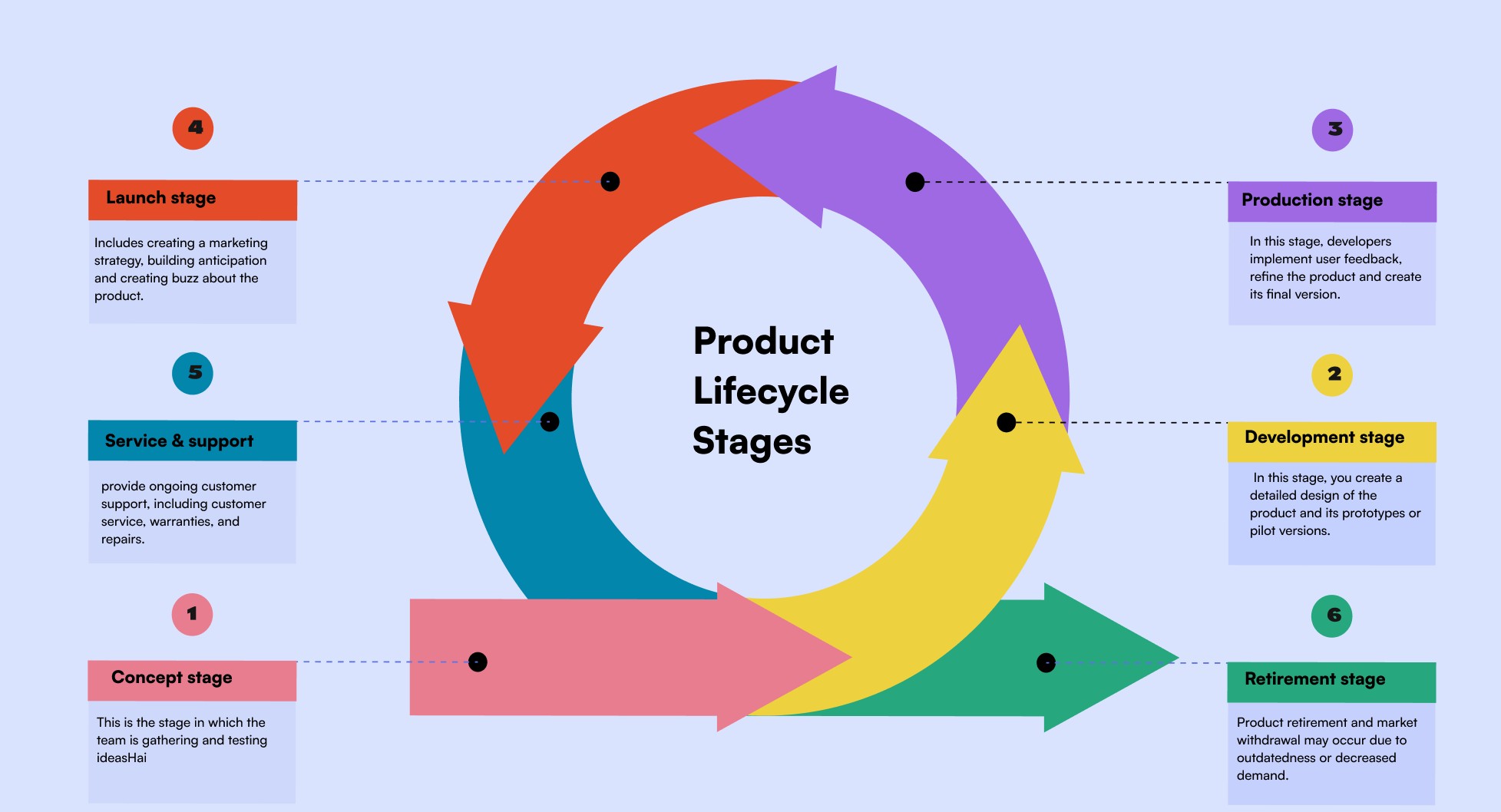
Many organisations still treat “data” as an internal by-product: something the analytics team cleans up after the fact. That mindset is expensive. When a dataset powers revenue reporting, customer targeting, risk controls, or operational planning, it behaves like a product: it needs an owner, reliability commitments, and a clear reason to exist. This is the practical heart of data product lifecycle management—moving from “tables and dashboards” to managed assets with accountable outcomes. If you have come across these ideas in a data analytics course, the real test is whether your organisation can run them under pressure: late pipelines, shifting definitions, and competing stakeholders.
Define the Data Product Before You Build It
A data product is any reusable data output that serves a defined “customer” (often internal): for example, a trusted “Active Customer” metric, a fraud-risk score, a demand forecast feed, or a curated customer 360 dataset.
Lifecycle management starts with one uncomfortable question: who owns the decision-quality of this data product? Without a named owner, everyone can request changes but nobody is responsible when numbers differ across teams.
A strong ownership model is usually split into three roles:
- Business owner (accountability):decides the definition and acceptable trade-offs (for example, what counts as “active”).
- Data product owner (delivery):manages backlog, prioritises improvements, coordinates with upstream teams.
- Technical owner (reliability):ensures pipelines, documentation, testing, and monitoring are in place.
This structure avoids a common failure mode: the data team gets blamed for disagreements that are actually definition problems. It also creates a path for deprecation—retiring a metric or dataset cleanly when it no longer fits the business.
Put SLAs on Data, Not Just Systems
Most organisations are comfortable with uptime SLAs for applications. Data products need the same discipline, because “available but wrong” is worse than “down”. Industry research frequently points out that poor data quality is costly; Gartner has cited an average annual cost of $12.9 million per organisation from poor data quality (based on 2020 research).
An SLA (service level agreement) is simply a documented promise: what level of service users can expect, how it will be measured, and what happens if it is not met. For data products, good SLAs are plain and measurable. Common examples:
- Freshness:“Daily customer churn table updated by 7:00 AM IST.”
- Completeness:“At least 99% of eligible transactions present.”
- Accuracy checks:“Revenue totals reconcile to finance ledger within agreed tolerance.”
- Availability:“Dataset accessible 99.5% of business hours.”
The unique angle here is that data SLAs are not just technical. They force business teams to define what “good enough” means. For example, marketing might accept a 2-hour delay for segmentation if accuracy is high, while fraud monitoring may need minute-level freshness even if some fields arrive later.
A practical use case: a retail team uses a “next-best-offer” dataset to trigger WhatsApp campaigns. If the customer status field is stale by one day, you end up targeting recently churned customers—wasted spend, annoyed users, and misleading campaign reports. A data SLA makes that failure visible early, and it creates a routine for communicating incidents and recovery times.
Monetisation: Value Capture Without Undermining Trust
“Monetisation” is often misunderstood as only selling data externally. In practice, monetisation strategies span a spectrum:
- Internal monetisation (cost-to-value):chargeback/showback for consumption, or allocate platform costs based on usage.
- Operational monetisation:embed data products into processes that reduce cost (routing, inventory, fraud losses).
- Revenue monetisation:packaged insights sold to partners, or premium analytics features built into a product.
The market signal is clear: data monetisation is increasingly treated as a formal business line. For example, industry market reports estimate the global data monetisation market at $4.05B in 2025, $4.74B in 2026, with growth projected through 2034. While market-size figures vary by source, the direction is consistent: organisations are investing in ways to turn data assets into measurable returns.
A grounded example: a logistics company may not “sell raw data”, but it can monetise a delivery-time prediction model by offering paid service tiers (guaranteed windows) or by improving route efficiency enough to reduce fuel and overtime. In both cases, the monetisation depends on the same foundation: a reliable data product with well-defined ownership and SLAs.
For learners coming from a data analytics course in Mumbai, this is the applied takeaway: monetisation is not a pricing slide—it is the downstream result of consistent definitions, dependable pipelines, and user trust.
Manage the Full Lifecycle: Launch, Operate, Improve, Retire
Data products degrade if they are not managed like living systems. A straightforward lifecycle looks like this:
- Discover:identify users, decisions, and “definition of done”.
- Build:create source mapping, transformations, tests, documentation.
- Launch:announce versioning, access rules, and SLA commitments.
- Operate:monitor freshness/quality, handle incidents, publish change logs.
- Improve:add features (new fields), reduce latency, increase coverage.
- Retire:deprecate old versions, migrate consumers, remove unused assets.
A common, avoidable problem is “metric drift”: the meaning of a KPI changes silently as business rules evolve. Versioning and change logs are not bureaucracy; they are how you prevent analysts from comparing “this quarter” to “last quarter” when the definition changed mid-year.
Concluding Note
Data product lifecycle management is a practical discipline: assign ownership so decisions have a home, define data SLAs so reliability is measurable, and treat monetisation as value capture built on trust. The strongest organisations do not rely on heroics when data breaks; they rely on clearly defined products with agreed expectations and transparent change management. If you want one working principle to keep, it is this: a data product is only “useful” when it is consistently defined, reliably delivered, and accountable to someone—ideas you may first encounter in a data analytics course, but only truly learn when the numbers start driving real decisions.
Business Name: Data Analytics Academy
Address: Landmark Tiwari Chai, Unit no. 902, 09th Floor, Ashok Premises, Old Nagardas Rd, Nicolas Wadi Rd, Mogra Village, Gundavali Gaothan, Andheri E, Mumbai, Maharashtra 400069, Phone: 095131 73654, Email: elevatedsda@gmail.com.